How Siding Repairs Help Improve Energy Efficiency
Professional Siding Solutions Built to Last…
Fast, Affordable & Local.
Small Repairs Can Make a Big Difference
When homeowners think about improving energy efficiency, they often focus on upgrading insulation, replacing windows, or installing a more efficient heating and cooling system. While those improvements can certainly help, the condition of your home’s siding is another important piece of the puzzle that is often overlooked.
Damaged siding doesn’t just affect curb appeal. It can compromise your home’s exterior envelope, allowing air and moisture to enter places they shouldn’t. Even relatively minor siding issues can reduce the overall efficiency of your home’s insulation and make your HVAC system work harder throughout the year.
For homeowners across Wilkes-Barre, Scranton, Luzerne County, and Lackawanna County, timely siding repairs can help maintain a more comfortable home while supporting long-term energy performance.
What Is the Exterior Envelope?
The exterior envelope includes all the building components that protect your home from the elements.
These typically include:
- Siding
- House wrap or weather-resistant barrier
- Exterior wall sheathing
- Windows
- Doors
- Flashing
- Roofing connections
- Foundation transitions
- Caulking and sealants
Rather than functioning independently, these materials work together to resist wind, rain, temperature changes, and unwanted air movement.
Air Doesn’t Need a Large Opening
One of the biggest misconceptions about drafts is that they require large holes.
In reality, even tiny gaps can allow significant air movement over time.
Air commonly enters through:
- Loose siding panels
- Cracked caulk
- Window trim gaps
- Damaged flashing
- Open joints
- Utility penetrations
- Areas where siding has pulled away from the home
Individually, these openings may seem insignificant. Collectively, they can noticeably affect indoor comfort and heating or cooling efficiency.
Understanding How Siding Contributes to Energy Efficiency
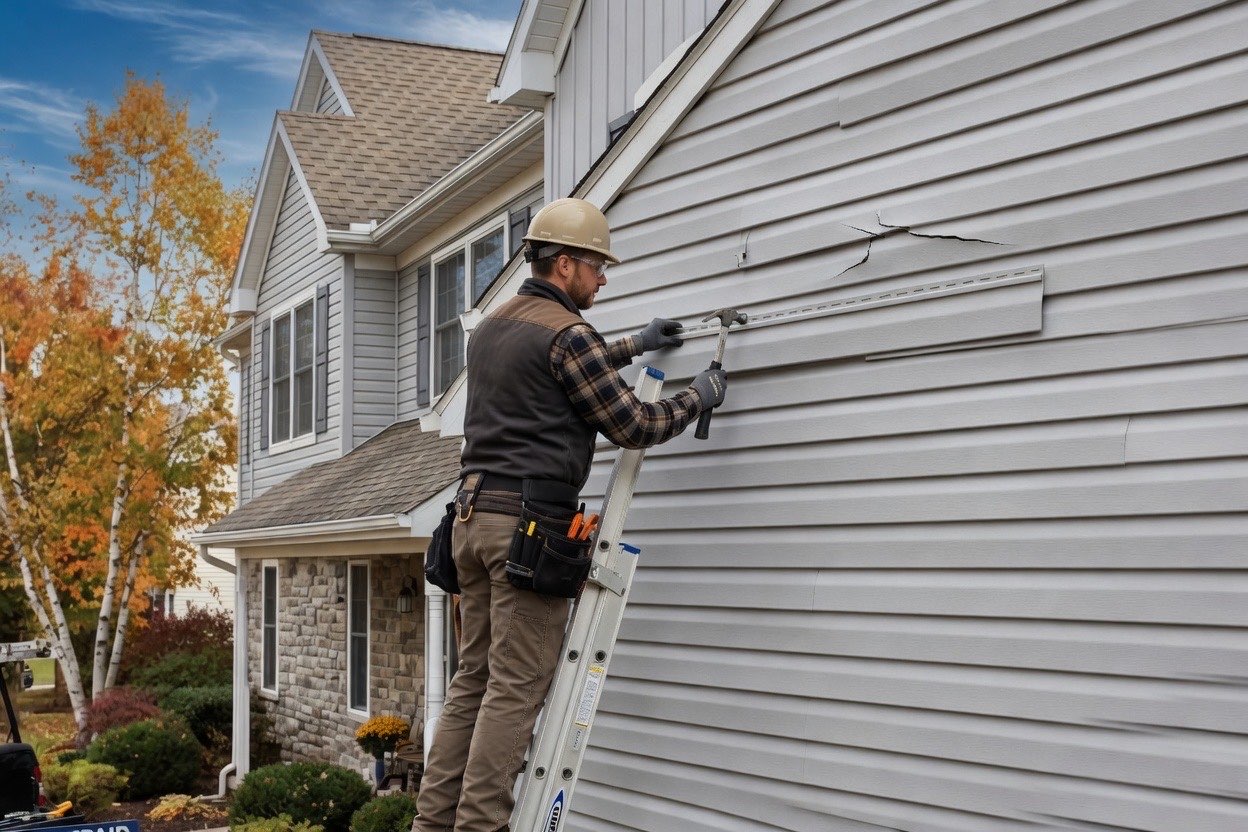
Siding itself is not insulation, but it plays an essential supporting role.
A properly functioning siding system helps:
- Protect wall insulation from moisture
- Reduce unwanted air infiltration
- Shield the home from wind-driven rain
- Preserve the weather-resistant barrier beneath the siding
- Support the overall performance of the building envelope
When siding is damaged, these protective functions can be compromised, even if the insulation inside the walls remains intact.
Air Leaks Are One of the Biggest Sources of Energy Loss
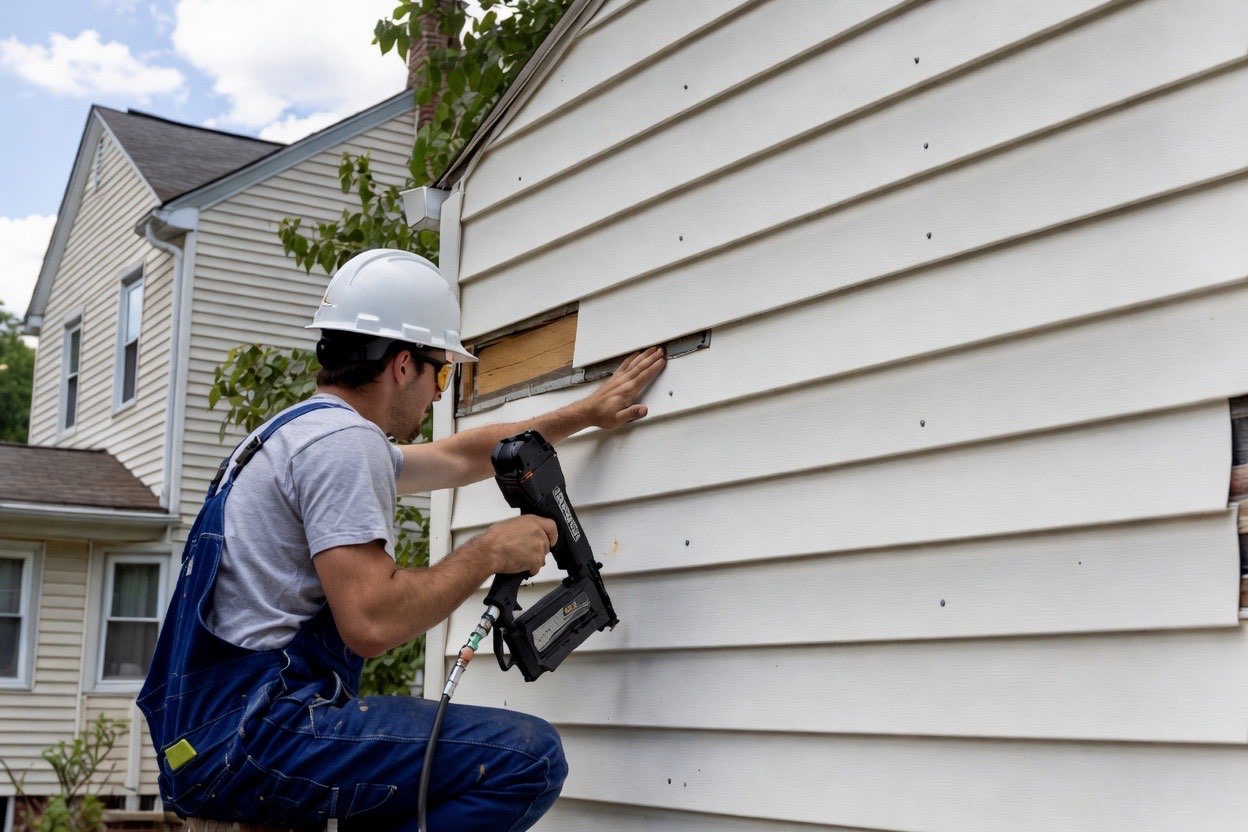
One of the primary ways homes lose energy is through uncontrolled air movement.
Small openings around damaged siding may allow:
- Cold outdoor air to enter during winter
- Warm outdoor air to enter during summer
- Conditioned indoor air to escape
- Moisture to reach wall assemblies
This constant exchange of indoor and outdoor air forces heating and cooling equipment to run longer in order to maintain comfortable indoor temperatures.
Over time, that increased workload may contribute to higher utility bills.
Common Siding Damage That Can Affect Efficiency
Not every siding problem is dramatic.
Some of the most common issues include:
- Cracked panels
- Loose or missing siding
- Warped sections
- Open seams
- Storm damage
- Failed caulking around trim
- Gaps where siding meets windows or doors
These problems may seem minor at first, but they can create pathways for both air and moisture to enter the wall system.
Northeast Pennsylvania’s Climate Demands a Strong Exterior
Homes throughout NEPA experience some of the most demanding weather conditions in the region.
Exterior walls must regularly withstand:
- Heavy snowfall
- Wind-driven rain
- Ice buildup
- Freeze-thaw cycles
- High humidity
- Strong seasonal winds
As building materials repeatedly expand and contract with changing temperatures, small openings can gradually develop.
Prompt siding repairs help maintain the integrity of the building envelope before those small problems become larger ones.
Energy Efficiency Is About the Entire Wall System
Many homeowners think of siding, insulation, and house wrap as separate components.
In reality, they function as one integrated system.
A typical exterior wall includes:
- Interior drywall
- Wall framing
- Insulation
- Wall sheathing
- Weather-resistant barrier
- Flashing
- Exterior siding
When every layer is functioning properly, the wall can better resist air leakage, manage moisture, and improve overall energy performance.
Repair vs. Replacement
Not every siding issue requires replacing the entire exterior.
In many cases, localized repairs are appropriate when damage is limited to specific areas.
Repairs may address:
- Individual cracked panels
- Wind damage
- Loose sections
- Minor impact damage
- Small moisture-related issues
- Trim repairs
However, if siding has widespread deterioration, repeated moisture intrusion, or significant age-related wear, replacement may offer a better long-term solution.
The right approach depends on the overall condition of the exterior rather than the size of a single damaged area.
Preventing Bigger Problems Later
One advantage of repairing siding promptly is that it often prevents more expensive issues from developing.
Addressing exterior damage early may help avoid:
- Larger moisture repairs
- Interior drywall damage
- Mold remediation
- Structural wood repairs
- Additional insulation replacement
Protecting the exterior envelope today often preserves the condition of everything behind it.
Strong Siding Supports a More Efficient Home
Energy efficiency isn’t determined by a single product or upgrade. It’s the result of multiple building components working together to keep conditioned air inside and the elements outside. Healthy siding plays an important role by protecting insulation, limiting air leaks, and shielding your home’s walls from moisture and weather.
For homeowners throughout Wilkes-Barre, Scranton, and the surrounding NEPA region, timely siding repairs are about more than maintaining appearance. They help preserve the performance of the entire exterior envelope, contributing to a home that stays more comfortable, more durable, and more energy efficient through every season.