Restoring Stability After Wind Damage
Professional Siding Solutions Built to Last…
Fast, Affordable & Local.
Windstorms moving through the Back Mountain area don’t always announce themselves with dramatic destruction—but the effects on a home’s exterior can be subtle at first. Loose siding is one of those issues that often shows up after the fact, especially on homes exposed to open ridgelines, tree gaps, or higher elevations common throughout Back Mountain.
Around nearby areas like Wilkes-Barre, homeowners often notice the same pattern after a strong front passes through: a panel that wasn’t quite right before suddenly becomes visibly out of place. In Northeast Pennsylvania, wind rarely acts alone—it works in combination with seasonal temperature shifts, moisture, and aging materials.
The approach here isn’t complicated, but it is deliberate. Loose siding is less about the panel itself and more about what allowed it to move in the first place.
Why Wind Exposes Weak Points in Siding
Wind doesn’t just “hit” a house—it creates pressure differences across surfaces. On certain walls, especially those facing prevailing winds across open stretches of Luzerne County, suction forces can pull outward on siding panels rather than pushing directly against them.
That’s where weaknesses tend to show up.
Common contributing factors include:
- Fasteners that have loosened over time due to repeated expansion and contraction
- Panels that were installed with improper spacing or alignment
- Aging siding that has lost flexibility
- Minor underlying issues in the wall sheathing or substrate
- Previous repairs that didn’t fully restore structural hold
Homes tucked into tree-lined streets or open residential pockets near areas like Scranton may experience different wind behavior depending on how surrounding structures channel airflow. Even small shifts in wind direction can affect how siding responds during a storm.
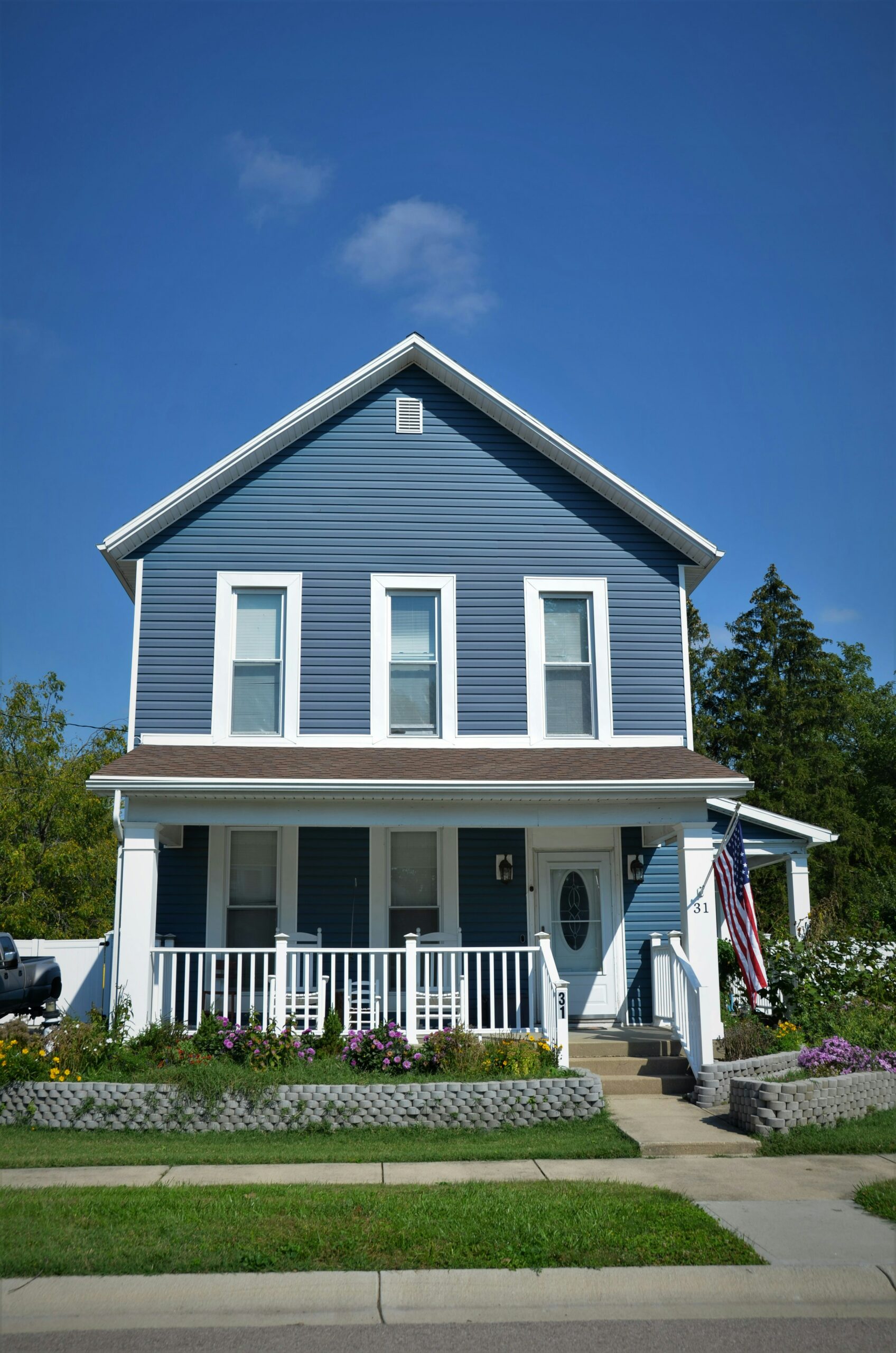
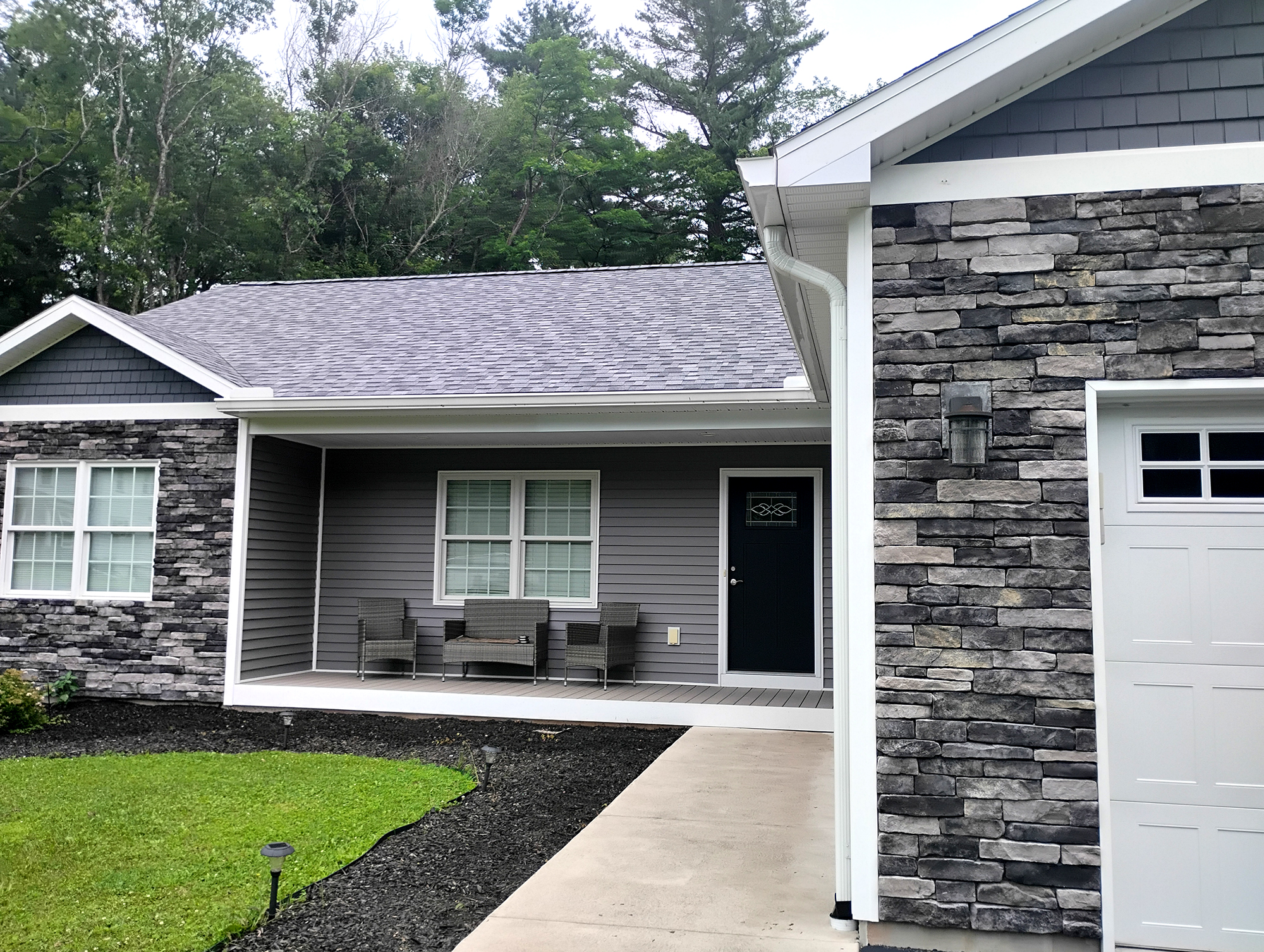
What Loose Siding Typically Looks Like After a Storm
Not all siding issues are immediately obvious. In fact, many homeowners first notice something feels “off” rather than seeing outright damage.
Here’s what tends to show up:
- Panels that appear slightly lifted or uneven along seams
- Sections that shift or flex when lightly pressed
- Gaps forming between overlapping courses
- Trim pieces separating at corners or edges
- Subtle rippling that wasn’t there before
Homes in wooded or partially shaded areas—common throughout the Back Mountain region—may also experience debris impact or trapped moisture, which can worsen small separations over time.
Repair vs. Replacement: Understanding the Difference
Not every wind-related issue requires a full siding replacement. In many cases, localized repair is enough—provided the underlying structure is still sound.
A practical way to think about it:
|
Situation |
Typical Approach |
|
Single loose panel |
Re-securing or replacing that section |
|
A few panels affected in one area |
Localized repair with re-fastening |
|
Widespread loosening across a wall |
Partial section evaluation |
|
Signs of moisture damage underneath |
Address substrate before reinstalling |
Accordion-style breakdowns can help clarify decision points:
Localized Wind Damage
Small sections affected by wind are often isolated to a single exposure side of the home. These repairs focus on restoring proper fastening and alignment without disturbing unaffected areas.
Systemic Installation Issues
If multiple sections are loosening, the issue may trace back to installation spacing, fastener placement, or material behavior over time rather than the wind event alone.
A Technical Insight: Fastening Behavior and Wind Uplift
Siding systems rely on controlled fastening rather than rigid attachment. Panels are typically installed with enough clearance to allow thermal movement, which means they aren’t fixed tightly in place.
Fasteners are designed to hold the panel while still allowing slight horizontal movement. When wind creates uplift pressure, the load is transferred through the locking edges of the siding rather than the fasteners alone.
If those locking mechanisms are compromised—or if fasteners are overdriven, restricting movement—the panel loses its ability to distribute wind load properly. Over time, repeated exposure can cause the panel to disengage at connection points, especially on walls that take the brunt of prevailing winds common in Northeast PA.
Conditions in Back Mountain That Affect Siding Performance
Homes in the Back Mountain region often share environmental traits that influence how siding holds up over time:
- Elevated terrain that increases wind exposure
- Mixed home ages, from newer builds to decades-old structures
- Tree coverage that both shields and redirects wind flow
- Seasonal freeze-thaw cycles that affect material flexibility
After a storm rolls through, it’s not uncommon for homeowners to notice issues when they return from daily routines—whether that’s driving back from Wilkes-Barre or spending time near local routes around Mountain Top and surrounding residential pockets. A panel that seemed fine the day before may now show slight misalignment or movement.
A Common Local Search Question
“Is loose siding after windstorm normal in Northeast Pennsylvania?”
Loose siding can occur after strong wind events in Northeast Pennsylvania due to the region’s combination of elevation, seasonal weather changes, and exposure to shifting wind patterns. While minor movement may happen over time, siding that becomes visibly loose or separated should be inspected, as it may indicate that fasteners have loosened, installation tolerances were exceeded, or the material has degraded. Addressing these issues early helps prevent moisture intrusion and further structural movement.

What Homeowners Often Notice First in Real Conditions
Before a formal inspection ever happens, most homeowners in the Back Mountain area pick up on subtle visual or physical cues:
- A wall section that no longer appears uniform under natural light
- Slight shadows forming where panels have separated
- Edges that catch the eye when walking up a driveway or returning home
- Minor movement when wind passes across the surface
These early indicators are often the difference between a simple repair and a more involved correction. Catching them early helps maintain the integrity of the exterior without unnecessary disruption.
Keeping Siding Aligned With Local Weather Patterns
Windstorms are part of life in Northeast Pennsylvania, especially in elevated and semi-rural areas like Back Mountain. Homes here aren’t just dealing with isolated weather events—they’re responding to repeated cycles of wind, moisture, and temperature change throughout the year.
Loose siding isn’t just a cosmetic issue. It’s a signal that the exterior envelope has experienced enough stress to shift out of alignment. Understanding why it happened—and addressing it correctly—ensures the home continues to perform as intended through future seasons.
For homeowners across Back Mountain, Wilkes-Barre, Scranton, and nearby Luzerne County communities, siding maintenance becomes less about reacting to damage and more about preserving how the home holds up in the environment it lives in every day.