Stabilizing Your Home After Wind Exposure
Professional Siding Solutions Built to Last…
Fast, Affordable & Local.
In the Back Mountain region of Northeastern Pennsylvania, windstorms tend to move through with enough force to reveal weak points in a home’s exterior—especially siding that’s already aged, improperly fastened, or slightly shifted over time. Areas around Back Mountain see this often due to elevation changes and open exposure between tree lines, where wind can accelerate and strike homes from less predictable angles.
For homeowners in nearby hubs like Wilkes-Barre and across Lackawanna County, loose siding after a storm isn’t unusual—but it’s also not something to ignore. What looks like a small cosmetic shift is often tied to how the siding system is fastened, how the structure underneath is holding up, and how the material has responded to years of seasonal movement.
At Siding Repair Pro, siding issues are typically approached by identifying the cause first, not just reattaching what’s visible. Wind rarely creates the problem on its own—it exposes what was already beginning to fail.
Why Wind Storms Affect Siding in This Area
Wind in Northeast PA doesn’t behave uniformly. In Back Mountain and surrounding elevated residential zones, wind can wrap around terrain, funnel between homes, and create pressure differentials across exterior walls.
Instead of simply pushing against siding, wind can create a lifting effect—especially on panels that already have slight gaps or loosened fasteners.
Common contributing factors include:
- Aging fasteners that have gradually lost grip
- Expansion and contraction from seasonal temperature swings
- Minor installation inconsistencies that become exposed over time
- Underlying moisture that weakens the substrate behind the siding
- Previous repairs that didn’t fully restore alignment or fastening integrity
Homes near wooded corridors or open stretches between developments often experience uneven wind exposure. A wall facing open land may behave differently than one shielded by nearby structures or trees.
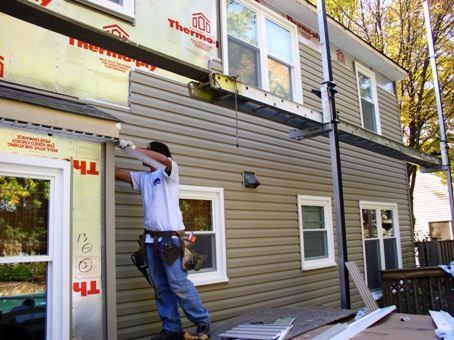
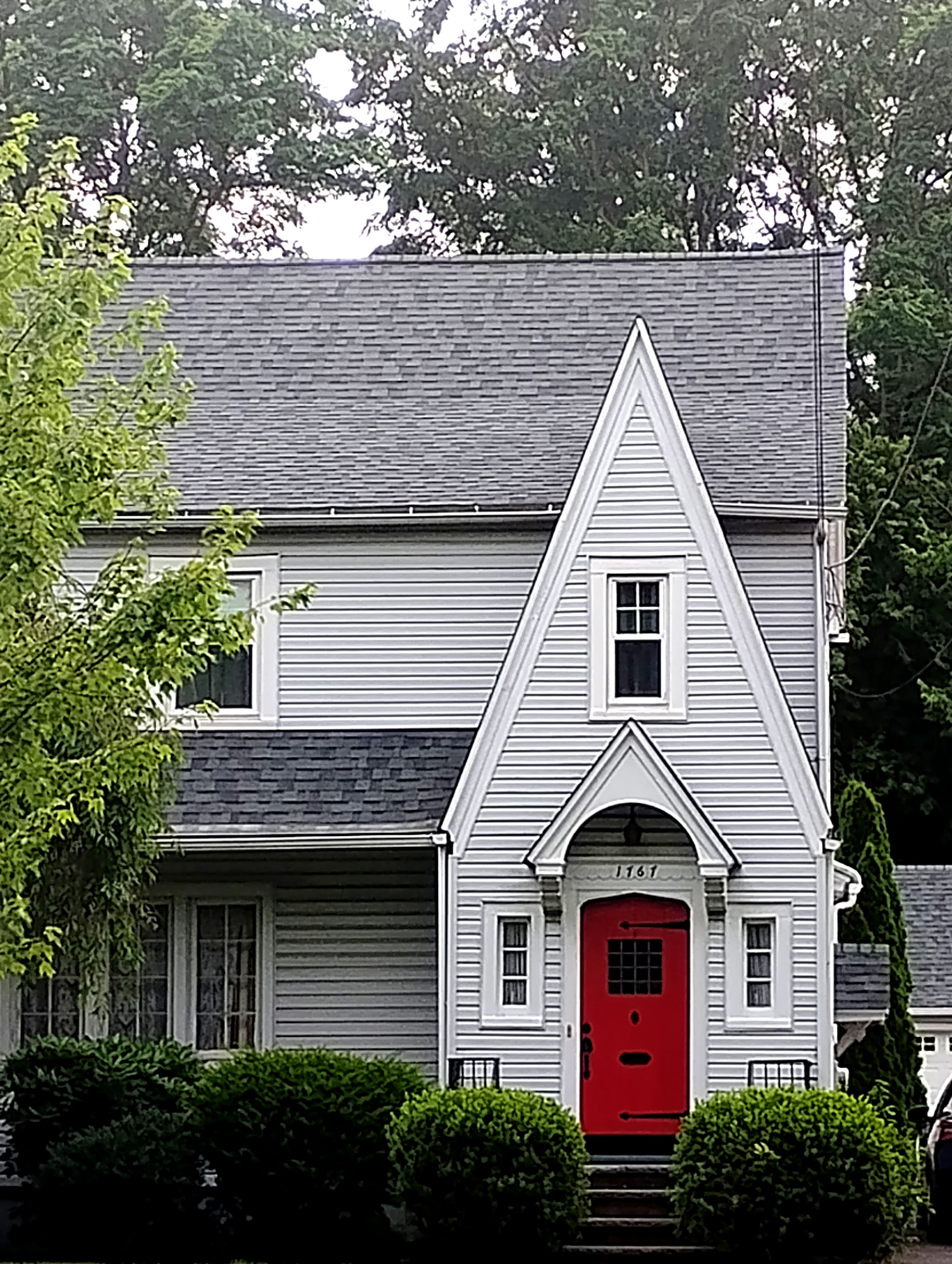
What Loose Siding Actually Looks Like After a Storm
Loose siding isn’t always obvious at first glance. Many homeowners notice something feels off before they can clearly identify the issue.
Typical signs include:
- Panels that appear slightly raised or uneven along seams
- Visible gaps where panels overlap
- Sections that flex when gently pressed
- Edges or corners separating from trim pieces
- Subtle rippling or distortion across a wall surface
A quick walk around the home—especially along wind-facing sides—can often reveal these inconsistencies. In neighborhoods across Back Mountain, it’s common for the most exposed wall to show movement first after a strong storm passes through.
It’s also lighter and easier to install, which can save time and labor costs without sacrificing strength. With a wide variety of finishes, colors, and textures available, it’s a smart balance between curb appeal and long-term performance.
Repair vs. Replacement: What the Situation Actually Calls For
Not every instance of loose siding requires full replacement. In many cases, the issue is localized and can be corrected without disturbing the entire exterior.
|
Condition Observed |
Typical Approach |
|
Single or isolated loose panel |
Re-secure or replace panel |
|
Several panels in one section |
Localized repair and fastening correction |
|
Widespread movement across multiple walls |
Broader evaluation and partial replacement |
|
Signs of underlying damage (rot, moisture) |
Address substrate before reinstallation |
Accordion-style breakdowns help clarify how homeowners can think about the situation:
Localized Wind Impact
When damage is limited to one area, it often reflects a specific wind exposure point. Repair focuses on restoring proper fastening and alignment without altering unaffected sections.
System-Wide Movement
If multiple areas are loosening, it may indicate that the siding system itself has reached a point where materials, fasteners, or installation tolerances are no longer performing as intended.
A Technical Insight: How Siding Systems Manage Movement
Siding systems—particularly vinyl—are designed to accommodate movement rather than remain rigid. Panels are installed with space at fastening points to allow for thermal expansion and contraction.
Fasteners are intentionally not driven tightly against the panel. Instead, they hold the siding in place while allowing slight horizontal movement. This prevents buckling during temperature changes, which are frequent in Northeast Pennsylvania’s seasonal climate.
Wind becomes a problem when this balance is disrupted. If panels are over-fastened, under-supported, or installed without proper spacing, they lose their ability to flex and distribute pressure. Over time, repeated wind exposure can cause the locking edges to disengage, leading to visible loosening.
Local Conditions That Influence Siding Performance
Homes throughout Back Mountain and surrounding Luzerne and Lackawanna County areas share environmental patterns that directly impact siding longevity:
- Frequent freeze-thaw cycles during winter months
- Tree-lined properties that create both protection and debris accumulation
- Homes built at varying elevations with differing wind exposure
- A mix of newer construction and older homes with aging exterior systems
Even something as simple as returning home after a walk along local areas near the Lackawanna River Heritage Trail can coincide with noticing a siding section that wasn’t previously out of place. Wind events don’t always cause immediate failure—they often accelerate gradual shifts that were already in motion.
What Homeowners Tend to Notice First
Before any inspection takes place, most homeowners in the region pick up on subtle visual changes:
- A section of siding that reflects light differently due to slight warping
- Uneven shadow lines along seams or trim
- Panels that appear misaligned when viewed from the driveway
- Slight movement or noise during high winds
These early indicators are often more reliable than obvious damage. Wind-related siding issues tend to begin small and become more noticeable over time if not corrected.
Staying Ahead of Wind-Related Siding Issues in Northeast PA
Windstorms are a regular part of life across Back Mountain, Wilkes-Barre, Scranton, and the surrounding areas of Northeastern Pennsylvania. Homes in these regions are built to handle the environment—but siding systems still rely on proper installation, fastening, and material condition to perform correctly over time.
Loose siding isn’t just a surface-level issue. It reflects how the exterior system is interacting with the environment around it. Understanding why it happens—and how to properly address it—helps homeowners maintain both the appearance and performance of their home through changing seasons.
In a region where weather patterns are predictable in their unpredictability, siding that stays properly secured is one less thing to worry about when the next storm moves through.